A four day safari is just enough time to fall properly under northern Tanzania's spell. In one elegant loop you will move from the forested shoreline of Lake Manyara to the horizonless plains of the Serengeti, then finish inside the incomparable Ngorongoro Crater on the lookout for black rhino. Expect generous time in the bush, skies crowded with birds, and wildlife encountered at nearly every turn.
| What’s included in my trip |
|
|||||
| What’s NOT included in my trip: |
|
You are picked up from your hotel at eight for the roughly two-hour drive to Lake Manyara, a narrow strip of green pressed against the sheer Rift Valley escarpment. Its shallow, alkaline waters attract drifting crowds of pink flamingos, while the lakeside forests ring with an astonishing variety of birds - over 400 species have been recorded, from darting bee-eaters to broad-billed hornbills.
Between February and June, watch too for yellow-billed stork and pink-backed pelican wading the shallows. On land the park is compact yet wonderfully varied, a mosaic of forest fed by escarpment seepage, swaggering troops of baboons and a proud resident cast of lion, giraffe, warthog and Cape buffalo. After a thorough game drive and a picnic lunch - hold your nose at the hippo pool - you drive on to your lodge in Karatu, in the Ngorongoro highlands, for the night.
After breakfast you leave Karatu and climb into the cool highlands of the Ngorongoro Conservation Area, rolling westward along the crater's rim. From the escarpment edge there is a first sweeping glimpse of the caldera's vast bowl before the descent begins - and with it a parade of grazing zebra, browsing elephant and stocky rhino that shows why this is the most wildlife-dense corner of Tanzania.
From the crater the road smooths out across rolling savannah toward the legendary Serengeti, a name that promises the wild in capital letters. As the plains open endlessly around you, the horizon stretches to infinity, and by the time you reach your camp or lodge the excitement of tomorrow's migration country has already taken hold.
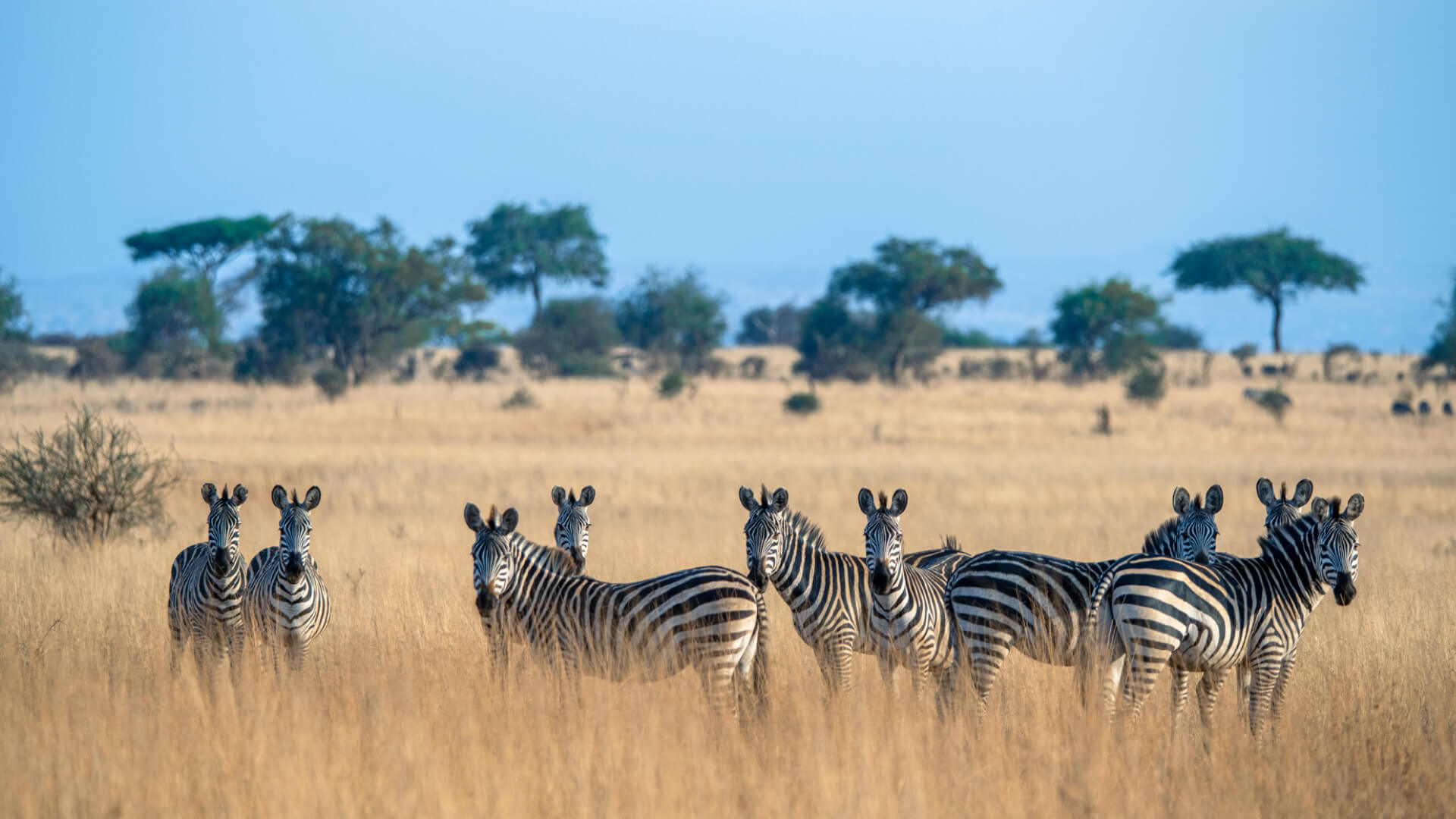
Morning on the Serengeti is pure theatre: the camp wakes to birdcalls, distant roars and the low drum of hooves somewhere beyond the trees. Ahead lies a full day inside a UNESCO World Heritage Site whose infinite plains host the Great Migration, so after a sunrise game drive you set off behind columns of wildebeest and zebra, trailed in turn by lion prides and patient leopards.
A picnic lunch in the open bush lets you simply listen to the rhythms of the savannah, from the hum of insects to the sighing of elephants far off. As the afternoon warms you roam between grassland, riverine woodland and granite kopjes, each habitat offering a new species and another picture-perfect moment.
Evening brings a second drive as shadows stretch and the plains catch fire with amber light, when predators stir and the Serengeti shows a wilder face before dark. Back at camp, a ceiling of stars seals one of the most memorable days of any African journey.
Your final morning belongs to the Ngorongoro Crater, billed by many visitors as the eighth wonder of the world. After a smooth registration at the gate you descend to the crater floor - a UNESCO World Heritage Site - and slip into one of Africa's densest wildlife arenas, enclosed by walls that soar roughly six hundred metres above the grassy bowl.
Around 25,000 large mammals share this floor, and in a few rewarding hours you can hope to meet black rhino, leopard, the celebrated black-maned lion and flamingo flocks along the soda shallows. When the game drive is done, your guide climbs back out of the crater and transfers you to Arusha, closing four days brimming with the untamed heart of Africa.
From Manyara's green edge to the crater bowl and the golden Serengeti beyond, this map sets the whole four day route before your eyes. The roads between camp, crater and lakeshore are clearly drawn, so distances and driving times make instant sense. Use it to track each day's progress as the landscape of northern Tanzania unfolds around you.
Lorem ipsum dolor sit amet, consectetuer adipiscing elit. Aenean commodo ligula eget dolor. Aenean massa. Cum sociis Theme natoque penatibus et magnis dis parturient montes, nascetur ridiculus mus
Lorem ipsum dolor sit amet, consectetuer adipiscing elit. Aenean commodo ligula eget dolor. Aenean massa. Cum sociis Theme natoque penatibus et magnis dis parturient montes, nascetur ridiculus mus