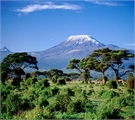
On the northern edge of Tanzania, above the coffee farms of the Chagga country, a single mountain rises so far above its surroundings that it carries its own weather. Kilimanjaro National Park wraps around Africa's highest peak, a UNESCO World Heritage Site and a dream that draws thousands of trekkers every year. Walking it is less a climb than a long, steady passage through five worlds of climate, ending at a summit that floats above the clouds themselves.
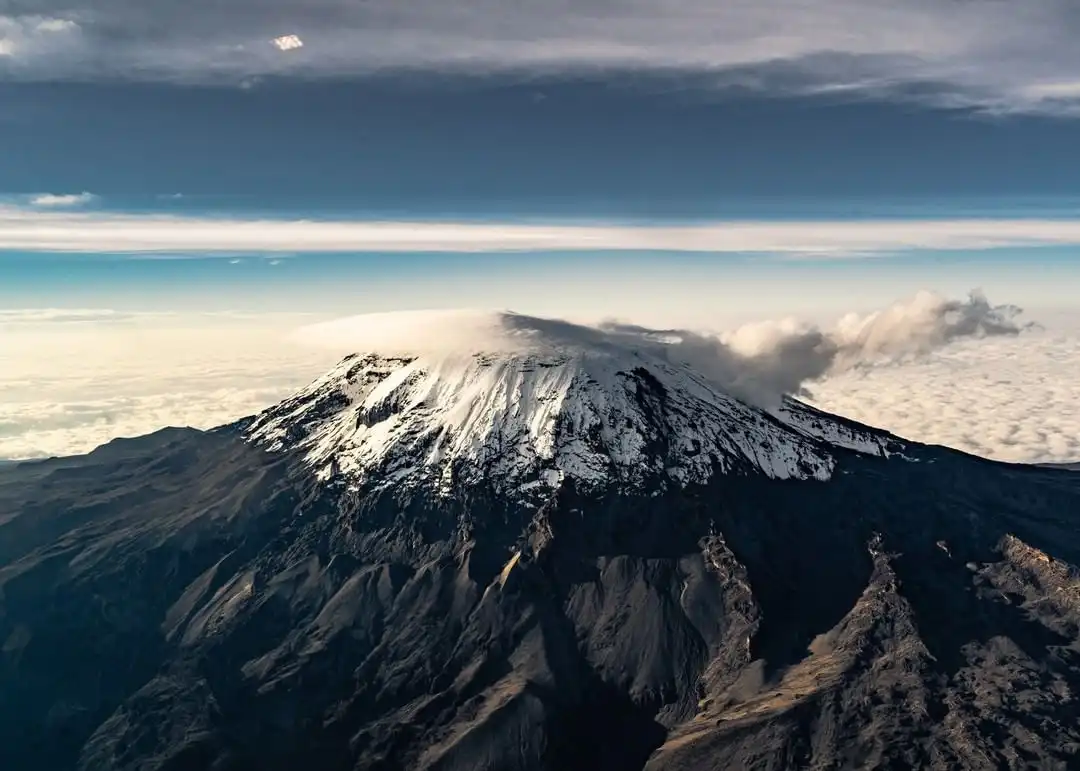
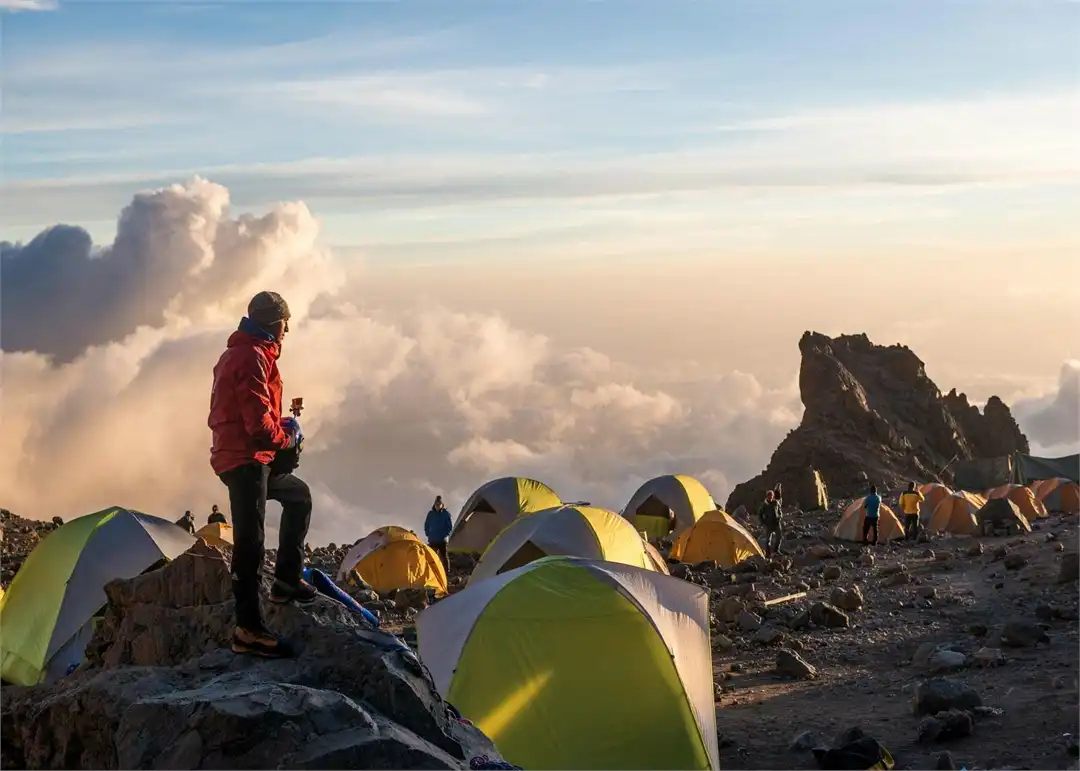
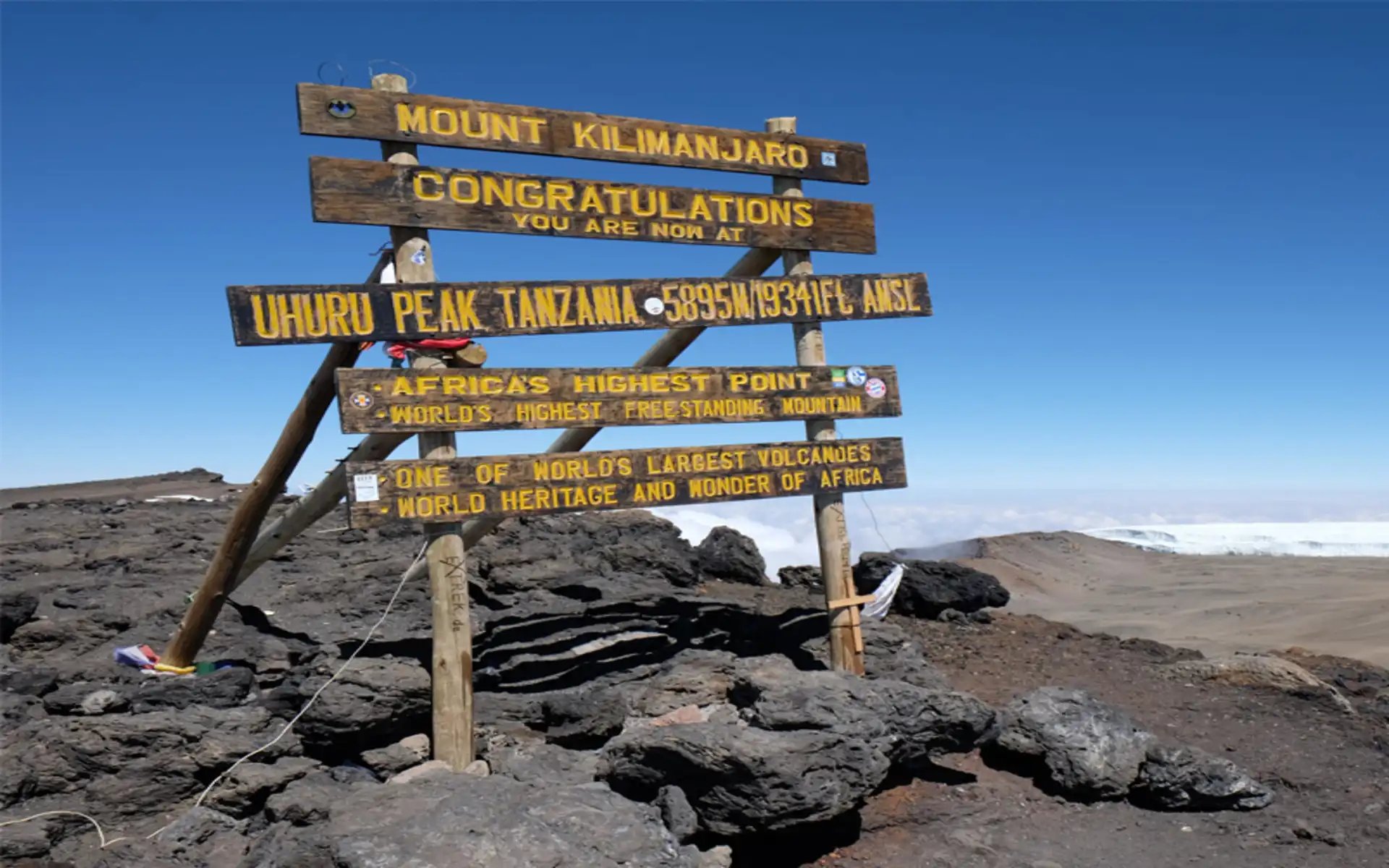
At 5,895 metres (19,341 feet), Uhuru Peak crowns the mountain and completes every Seven Summits ambition. The trek climbs from a green rainforest belt through heather and moorland, across an alpine desert of rock and scree, and finally onto the arctic zone, where ice and snow cling to the crater rim. Scientists warn the glaciers are shrinking, which makes the frozen crown both more treasured and more urgent to see.
The park is far more than a trail to the top. Lower slopes are dense with life - elephants and buffalo wander the forest fringe, black-and-white colobus monkeys leap between branches, and more than 180 bird species inhabit the hillside, among them the Abbot's starling and the rare bearded vulture. Every gain in height brings its own community of plants and animals.
Kilimanjaro's foothills have belonged to the Chagga for centuries, farmers who terraced volcanic soils into some of the most productive farmland in East Africa. Time spent among their villages - tasting the bananas and coffee, walking the underground irrigation furrows their ancestors dug - deepens the whole experience of the park and shows how people and mountain have shaped one another.
The mountain offers several well-trodden routes, each with its own personality. Marangu climbs steadily through forest, with trekkers sleeping in stone huts. Machame is steeper and wilder, with magnificent scenery. Lemosho crosses the quiet western slopes and is prized for beauty and acclimatisation alike. Rongai approaches from the drier north, while Umbwe is the tough, direct test for experienced climbers. The summit is shared - the difference lies in the journey there.
Weather decides much of summit success. The clear dry spells from late June to October and from December to February give the best chances of stable skies on the crater rim. The wetter months - March to May and November - bring mist, mud and lush slopes alive with birdsong. Either way, the acclimatisation days built into most itineraries make the difference between a summit bid and a story about a very fine walk.
A place to rest matters as much as the route. Rustic stone huts serve the Marangu trail, well-appointed tented camps take the western routes, and at the base, lodges and hotels look straight up at the mountain like a permanent sunrise. Waking to that view - the biggest free-standing peak on Earth - is a moment no itinerary can fully describe.
A Kilimanjaro climb is a physical campaign wrapped inside a spiritual journey, and it lingers long after the aches fade. Poles are planted, one after another, through five worlds of weather until the summit finally allows itself to be touched. To tread lightly, respect the culture that guards the mountain, and breathe the thin air at 5,895 metres is to understand why Africa's roof remains a lifetime highlight.