Across northern Tanzania's safari heartland, Tarangire quietly outshines many of its neighbours during the driest months. Covering roughly 2,850 square kilometres - the sixth-largest national park in the country - it rolls through open savannah, riverine woodland and grassland dotted with ancient baobabs, and it is famed above all for elephants. Here visitors trade congestion for space and crowds for genuine wilderness.
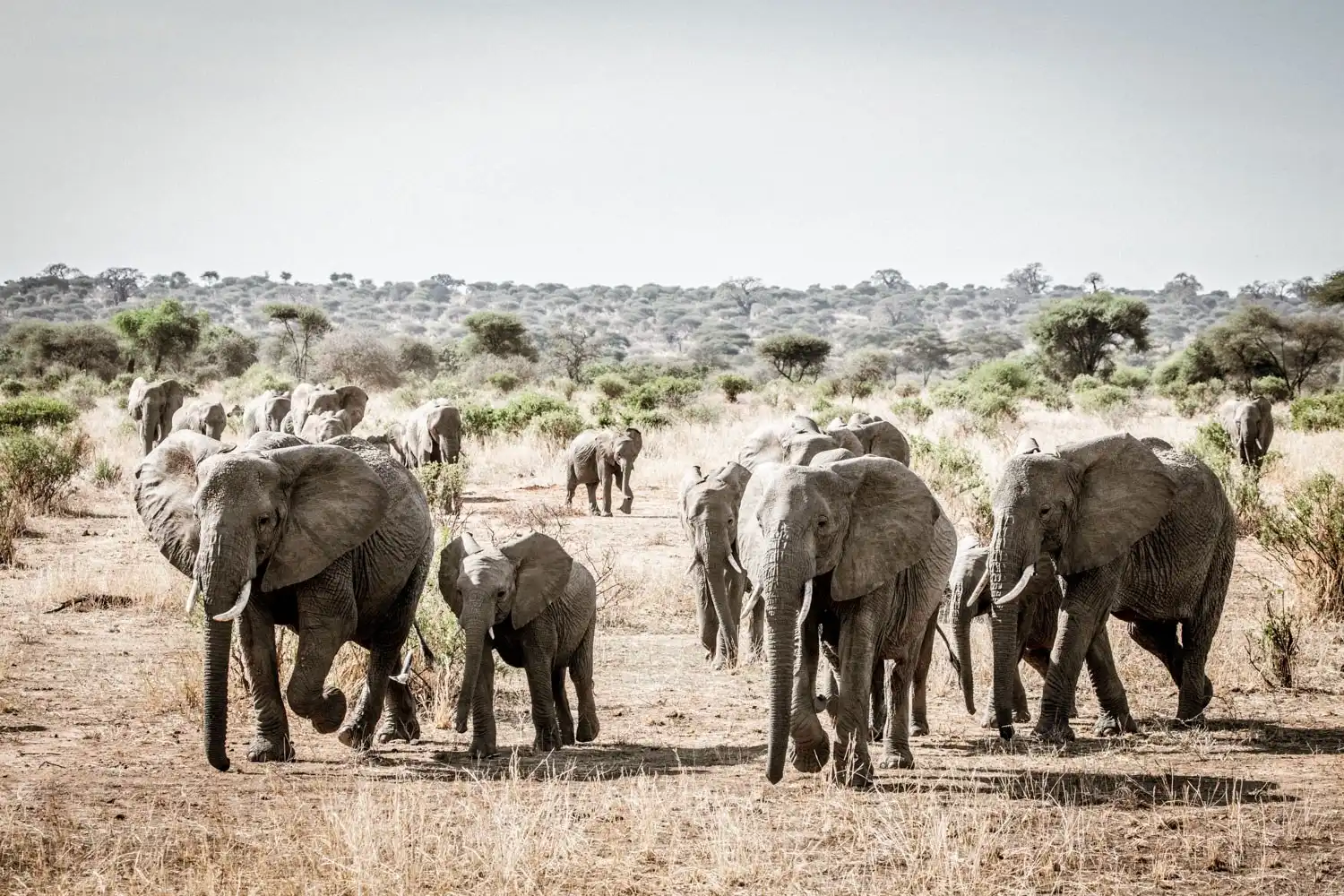
Tarangire stands apart for its elephant numbers, among the highest of any reserve in Tanzania. As seasonal water dries up elsewhere, vast herds gather around the permanent Tarangire River, their bulls trundling between the giant trees while calves learn the craft of dust baths and mud rolling. Watching fifty elephants filter through morning light is the sort of sight that stays with you for life.
Guided game drives carry you through this shifting landscape - lush and green after the rains, gold and shimmering as the year dries - and every season turns the country a different colour. Experienced guides read the dust and the alarm calls, and the reward is wildlife close at hand: elephants at the crossing points, lions under acacia shade, kudus ghosting between the trees.
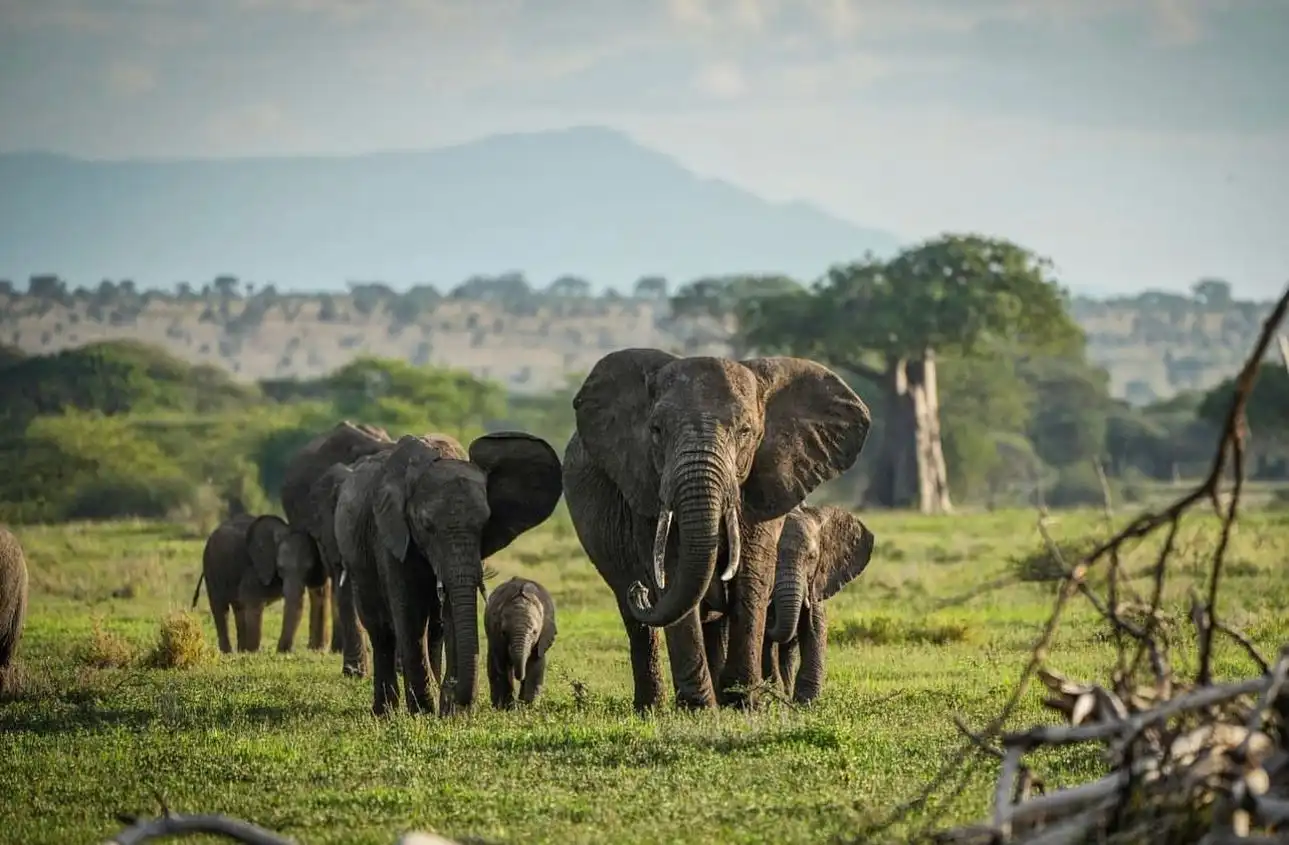
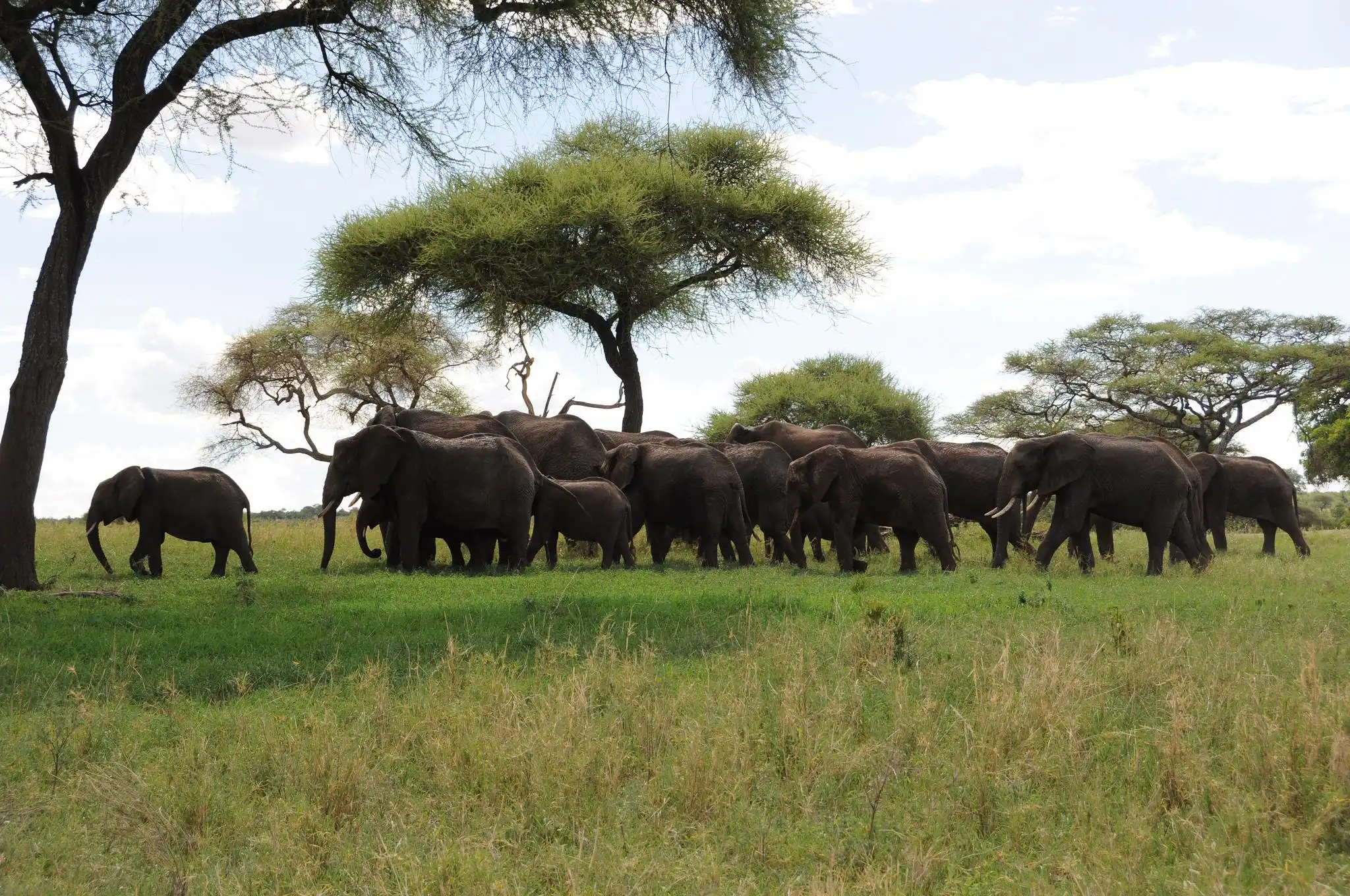
Much of Tarangire's character comes from its topography. The river gives the park its pulse, threading through the heart of the wilderness and drawing animals from far beyond the boundary as the dry season deepens. Around it spread termite mounds like old citadels, dense thickets, and plains that lift toward the low hills of the Maasai steppe - a varied canvas that makes every bend of the road a fresh photograph.
Tarangire wears the crown of the baobab capital for good reason. These ancient giants, known locally as the upside-down trees, surge out of the grassland like monuments, their swollen trunks storing water through months of drought. Beyond their beauty they are larders for the wild - elephants strip their bark, baboons raid their fruit, and countless insects live within their hollow hearts.
With more than 500 bird species on the books, Tarangire ranks among East Africa's most exciting birding destinations. The mix of floodplain, woodland and river attracts everything from bee-eaters and hornbills to secretary birds stalking the grass, with seasonal arrivals from Europe and Asia adding their voices to the chorus. Kori bustards, among the heaviest of flying birds, amble boldly across the open country.
Conservation sits at the centre of Tarangire's story. Park authorities work with surrounding Maasai communities to protect migration corridors and keep the wider ecosystem connected, while visitors are encouraged to travel lightly - staying on track, respecting animals and supporting the lodges and camps that reinvest in the landscape.
Where you stay shapes how you experience Tarangire. Choose from cliff-top lodges looking over the river, exclusive tented camps tucked into the woodland, or properties on the park boundary, each offering its own window onto the wilderness. Guided walking safaris and night drives extend the day, revealing the creatures that own these plains after dark.
In the end, Tarangire does exactly what its river promises: it sustains life generously and shows it off unapologetically. Wild elephants, stooped giant baobabs, a sky busy with birds - this is the classic East African safari, delivered with fewer crowds and more soul. Come for the elephants, and you will leave in love with everything else.