The Marangu Route - nicknamed the Coca-Cola Route - is Kilimanjaro's most popular trail and the friendliest introduction to Africa's highest peak. Where other routes demand tents, Marangu lulls you to sleep in solid permanent huts, and its sweeping views across both Mawenzi and Kibo add to the appeal all the way up. The route offers 6 and 5-day itineraries, the shorter of which is best left to experienced trekkers.
Choosing the 6 day Marangu itinerary gives first-timers the extra day of acclimatization their bodies will thank them for. In total you cover 64 km (40 miles) of mountain, and the comfortable conditions of the route help deliver a 92% climbing summit success rate on the longer programme - a superb reason to take the full six days and enjoy it.
| What’s included in my trip |
|
||||||
| What’s NOT included in my trip: |
|
After a quick breakfast at your hotel you are picked up in Moshi and driven to Marangu Gate, where the porters sort and pack the day's loads while you register with the Tanzania National Parks (TANAPA). The ascent begins through true rainforest, where rain, mud and pockets of fog come with the territory - and where colobus monkeys may well escort you through the trees. Lunch comes about halfway, and you reach the Mandara Huts in the late afternoon or early evening; your fast-moving porters and chefs are already there, having set up camp, boiled drinking water and prepared snacks for your arrival. After washing up, a hot dinner is served, followed by overnight
After breakfast the trail climbs out of the forest and into heather moorland, passing the Maundi Crater whose rim detour offers a spectacular view across the Kibo Crater. Here you meet the exotic world of giant lobelia and towering groundsel, gaining height steadily for about 6 hours until Horombo Hut (3720m) appears on its small plateau, a bunkhouse able to sleep 120 climbers. The porters are waiting with drinking and washing water; evening snacks and a dinner from the chef follow, and you should prepare for a night cold enough to drop below freezing.
Today exists so your body can catch up with the altitude, and Horombo makes a comfortable base for it. The recommended plan is a guided day hike toward Mawenzi Hut (4600m) and back - climb high, sleep low, the golden rule of mountain acclimatization. Breakfast and dinner are served at the hut, while lunch can be packed up the hill or enjoyed at base, exactly as you prefer.
An early breakfast starts the ascent into the stark alpine desert, where the air thins and the ground turns to rock and dust. At the fork you choose between two trails to Kibo Hut (4700m): the upper route, the same path used for yesterday's Mawenzi day hike, or the more popular lower route, which shaves roughly an hour off the walk. Both deliver you to the high heart of the mountain.
Kibo Hut sits in the "Saddle", the barren bowl hanging between the peaks of Mawenzi and Kibo in the alpine desert. There is no water at the camp, but bottled mineral water and soft drinks can be bought at the camp office. An early dinner is served so hikers can rest before summit night, and your guide briefs you in detail on how to prepare; get to sleep by 19:00, because tomorrow starts in the small hours.
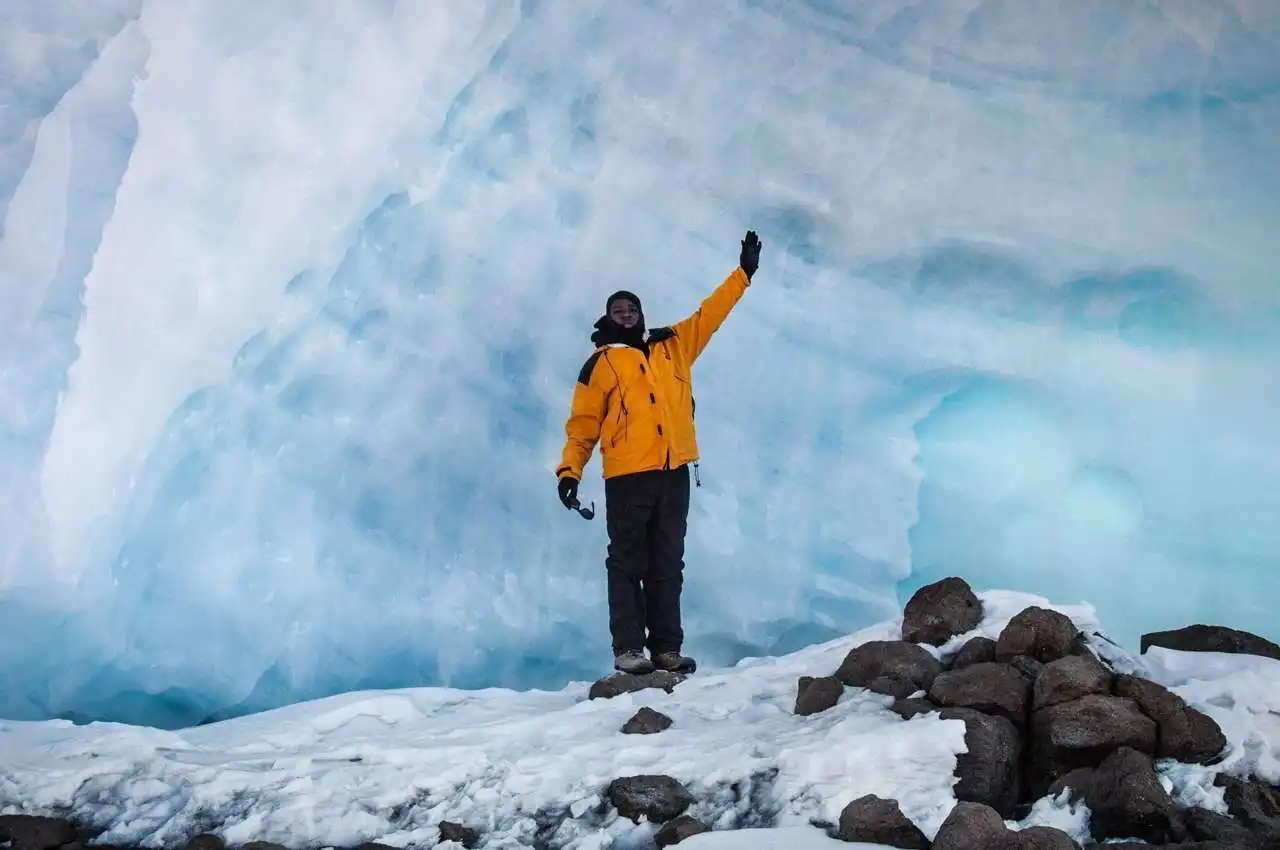
Your guide wakes the team around 23:30 for tea and biscuits before the summit attempt begins. The trail climbs steeply and rockily to Hans Meyer Cave (5150m), then onward to Gillman's Point (5681m) on the crater rim - in itself an achievement worth savouring. From Gillman's the route usually runs over snow all the way to Uhuru Peak (5895m), and reaching the true roof of Africa is a lifetime accomplishment. Time at the top is limited to photographs and a warming drink before the descent toward Barafu begins; the hike down to Kibo Hut takes about 3 hours
At Kibo Hut you rest and enjoy a hot lunch in the sun before continuing the descent to Horombo Hut (3720m). Dinner, a proper wash and a deep, well-earned sleep at the hut close the biggest day of the entire climb.
A well-deserved breakfast sets the stage for one of the mountain's happiest traditions: the staff break into a celebration full of dancing and singing, and it is here that you present your tips to the guide, assistant guides, chefs and porters. Then comes a descent of around 6 hours back to Marangu Gate (1980m), where the National Park asks every hiker to sign the register and collect a certificate of completion - green for those who reached Gillman's Point (5681m), gold for those who summitted Uhuru Peak (5895m). Certificates in hand, you drive back to Moshi for long overdue showers and more celebrations.
Kilimanjaro sees climbers from every corner of the world, and this map puts the mountain, its gates and its approach towns in clear perspective. Marangu Gate, the hut route and the summit climb toward Kibo all line up so you can trace each day's altitude gain before you even lace your boots. A simple orientation that makes a giant mountain feel manageable.
Lorem ipsum dolor sit amet, consectetuer adipiscing elit. Aenean commodo ligula eget dolor. Aenean massa. Cum sociis Theme natoque penatibus et magnis dis parturient montes, nascetur ridiculus mus
Lorem ipsum dolor sit amet, consectetuer adipiscing elit. Aenean commodo ligula eget dolor. Aenean massa. Cum sociis Theme natoque penatibus et magnis dis parturient montes, nascetur ridiculus mus