Join us for an epic 7-day ascent of Africa's highest mountain along the Machame Route, a superb trail that gathers the very best of Kilimanjaro into a single journey. In the space of a week you pass from picture-postcard rainforest and bare rocky ridges to shimmering glaciers, all with panoramic views back over Tanzania from the rooftop of the continent.
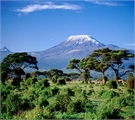
Mount Kilimanjaro, rising within the Kilimanjaro National Park in Tanzania, stands 5895m high and is famed as the highest mountain in Africa. Ascending it is an immensely popular ambition, not least because climbers long to stand among the vast glaciers that crown its summit.
Our journey begins among the coffee groves of Moshi, tucked close against the mountain's lower slopes, and from here we drive to our starting point at Machame Gate.
After the first night at Machame Camp (2980m), the next two days are spent crossing rainforest, moorland and arid, rocky terrain, with overnight stays at Shira Camp (3840m) and Barranco Camp (3950m).
Most days on this trip are given over to acclimatization at serious altitude - hiking higher during the day before dropping back down to sleep, giving everyone time to adjust.
Days 4 and 5 bring the celebrated Great Barranco Wall and the first dramatic views of Heim Glacier hanging above the clouds.
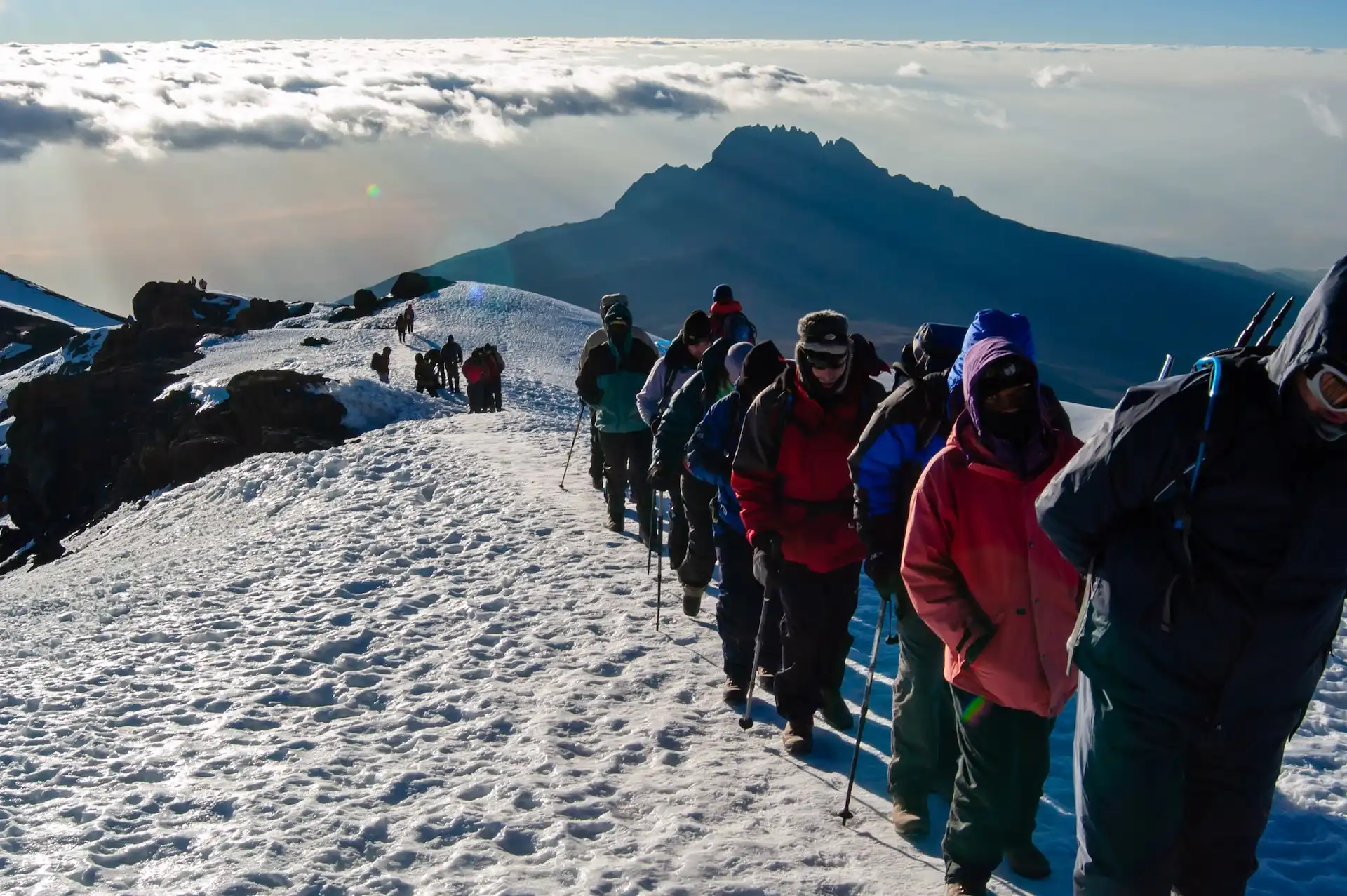
Day 6 is the climax and undoubted highlight of the whole adventure, as the summit of Kilimanjaro is scaled. Demanding on both body and mind, the payoff is enormous: after around 8 hours of intense hiking you stand on the highest point, Uhuru Peak (5895m), an astonishing place where the views stretch for miles and you feel, quite literally, on top of the world!
From the summit we begin our descent, dropping all the way back to the overnight camp of Mweka (3100m) and finishing at Mweka Gate on day 7 - weary, happy, satisfied and rightly proud of such a mighty feat.
Climbing Kilimanjaro is a true bucket-list moment – and Mount Kilimanjaro, nestled within Kilimanjaro National Park, is waiting for you. Simply book now so you don’t miss out on this unforgettable experience!
| What’s included in my trip |
|
||||||
| What’s NOT included in my trip: |
|
The drive from Moshi to the Mount Kilimanjaro National Park Gate takes about 50 minutes, threading through the village of Machame on the mountain's lower slopes.
From the gate we strike into the rain forest, following a winding trail up a ridge. Lower down the path is muddy and slippery, so gaiters and trekking poles earn their keep here; after a short final push we reach the Machame Camp for the first night.
Breakfast done, we leave the glades of the rain forest and climb an ascending path, crossing a little valley before walking a steep, heather-covered rocky ridge to its very end. The route then swings west into a river gorge, where we pause for rest, dinner and overnight at the Shira campsite.
From the Shira Plateau we head east up a ridge, passing the junction towards the peak of Kibo before our direction turns South East toward the Lava Tower, known as the "Shark's Tooth". Just past the tower a second junction leads up to the Arrow Glacier at an altitude of 16,000ft, after which we descend to the Barranco Hut at 13,000ft. Here we rest, enjoy dinner and overnight. Although you finish the day at much the same elevation as when you started, this day is gold for acclimatization and will help your body prepare for summit day.
After breakfast we leave Barranco and climb the steep ridge past the Barranco Wall, descending to the Karanga Valley campsite. It is a deliberately short day meant purely for acclimatization.
Leaving Karanga we reach the junction with the Mweka Trail and continue up to the Barafu Hut, completing the South Circuit, which has framed the summit from many different angles. From Barafu the twin peaks of Mawenzi and Kibo stand out clearly ahead. Here we make camp, rest, enjoy dinner and run through the plan for summit day.
Very early in the morning - midnight to 2am - we begin the climb to the summit between the Rebmann and Ratzel glaciers. Heading in a northwesterly direction, we ascend through heavy scree toward Stella Point on the crater rim. This is the most mentally and physically challenging stretch of the entire trek.
At Stella Point (18,600 ft) we stop for a short rest and, weather permitting, are rewarded with the most magnificent sunrise you are ever likely to see. From here the final 1-hour ascent to the summit may be snow-covered. At Uhuru Peak you stand at the highest point on Mount Kilimanjaro and the whole of Africa, and the faster hikers among you will catch the sunrise from the top itself.
From the summit we turn to the descent, dropping straight down to the Mweka Hut campsite and stopping at Barafu for lunch. Gaiters and trekking poles are essential on the loose gravel going down. Mweka Camp lies in the upper forest, where mist or rain can arrive in the late afternoon; later in the evening we enjoy our last dinner on the mountain and a well-earned sleep.
After breakfast we continue the descent to the Mweka Park Gate, where your summit certificates await. At these lower elevations the way can be wet and muddy - gaiters and trekking poles help - and shorts and t-shirts will probably be plenty (keep rain gear and warmer layers close at hand). From the gate it is another hour to Mweka Village, where a vehicle collects you for the drive back to your hotel in Moshi.
Kilimanjaro rises alone above the Tanzanian plains - a great icy pyramid ringed by savannah - and this map shows exactly where Machame Gate lies and how each day's trail climbs toward the summit. Campsites, ridges and the final approach to Uhuru are all marked, so you can trace the whole seven-day route in a glance. The perfect companion for keeping the big picture clear while you are on the mountain.
Lorem ipsum dolor sit amet, consectetuer adipiscing elit. Aenean commodo ligula eget dolor. Aenean massa. Cum sociis Theme natoque penatibus et magnis dis parturient montes, nascetur ridiculus mus
Lorem ipsum dolor sit amet, consectetuer adipiscing elit. Aenean commodo ligula eget dolor. Aenean massa. Cum sociis Theme natoque penatibus et magnis dis parturient montes, nascetur ridiculus mus